
Running a small business in India takes courage, hustle, and heart. But here's the truth most business owners discover the hard way: gut feeling is not a financial strategy.
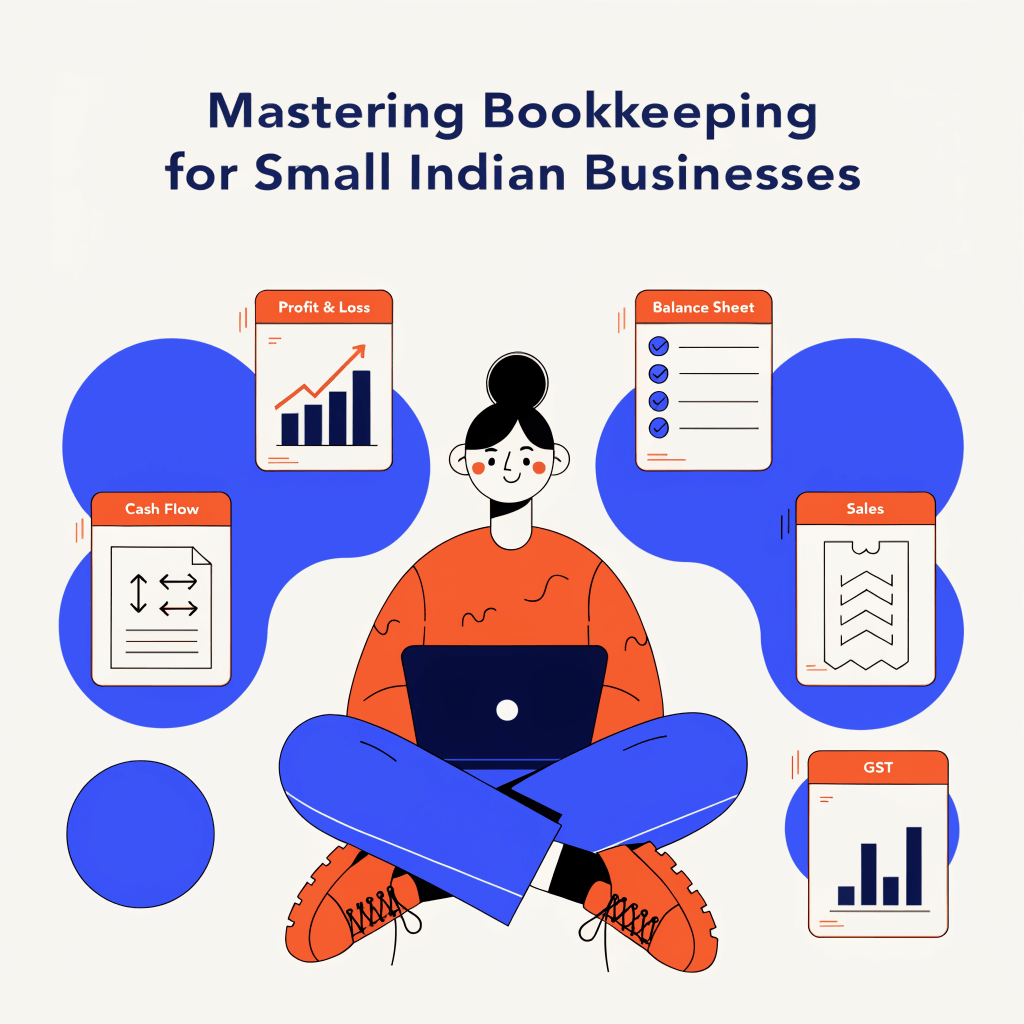
Whether you run a kirana store, a boutique, a service firm, or a growing MSME — the numbers tell a story your intuition can't always see. And the best part? You don't need to be a CA to read them. You just need to know which 5 reports to look at every month — and what to look for in each one.
Let's break them down.
The Profit & Loss statement — also called the Income Statement — shows you how much money your business earned, how much it spent, and whether you actually made a profit during the month.
Many business owners confuse revenue with profit. High sales don't mean high profit. The P&L is the mirror that shows you the truth. If your revenue is ₹5 lakhs but your expenses are ₹4.8 lakhs, you're not doing as well as you think.
BillClap Tip: BillClap auto-generates your P&L based on your recorded sales and expenses — no manual calculation needed.
A business can be profitable on paper and still run out of cash. The Cash Flow Statement tracks the actual movement of money — what came in and what went out — during the month.
Most small business failures are not caused by lack of profit — they're caused by poor cash flow. You might have ₹10 lakh worth of pending invoices but only ₹50,000 in your bank account. Cash flow planning keeps you out of that trap.
BillClap Tip: Track outstanding payments and due dates directly from BillClap's party ledger — so you always know who owes you and when.
The Balance Sheet gives you a snapshot of your business's financial position on a specific date — what you own (assets), what you owe (liabilities), and what's left for you (equity/net worth).
Banks and lenders look at your balance sheet first when you apply for a loan. Even if you're not looking for credit now, a healthy balance sheet builds your financial credibility and shows that your business is growing sustainably.
BillClap Tip: BillClap's ledger and inventory features keep your asset records up to date automatically with every transaction.
For businesses that deal in physical goods — retail shops, kiranas, wholesalers, manufacturers — the Inventory Report tracks what stock you have, what's moving fast, what's sitting idle, and what needs reordering.
Excess inventory means blocked cash. Insufficient inventory means lost sales and unhappy customers. A monthly inventory review keeps both extremes in check — and helps you make smarter buying decisions.
BillClap Tip: BillClap's real-time stock tracking automatically updates inventory with every sale and purchase entry, and alerts you when items hit reorder levels.
For every GST-registered business in India, the GST Summary Report is non-negotiable. It gives you a consolidated view of your monthly GST collected (output tax), GST paid on purchases (input tax credit), and your net GST liability.
GST compliance is not optional — and it doesn't have to be stressful. A monthly GST report review means no last-minute scrambles, no missed ITC, and no penalties. It also keeps your CA happy and your audits clean.
BillClap Tip: BillClap generates GST-ready invoices and auto-compiles your GST summary — so filing your returns becomes a matter of minutes, not hours.
Knowing which reports to review is half the battle. The other half is actually doing it consistently. Here's a simple routine that works for busy business owners:
This 5-step monthly rhythm takes less than 2 hours total — and it could save you from costly mistakes, missed opportunities, and unwanted surprises.
You don't need to be a finance expert to run a financially healthy business. You just need to look at the right numbers, at the right time, every month.
These 5 reports — P&L, Cash Flow, Balance Sheet, Inventory, and GST Summary — give you a complete 360° view of your business health. Together, they tell you if you're growing, where you're leaking money, and what decisions to make next.
The good news? With BillClap, all of these reports are available at your fingertips — automatically updated with every transaction, without needing a separate accounting team.
Because when you understand your numbers, you're not just running a business — you're building one.
👉 Start tracking your finances with BillClap today — it's free to get started.

Download our mobile app from playstore now






All-in-one cloud-based business management software. Sell Smart, Sell Online with 0% Commission. Manage billing, bahikhata, inventory & expenses


