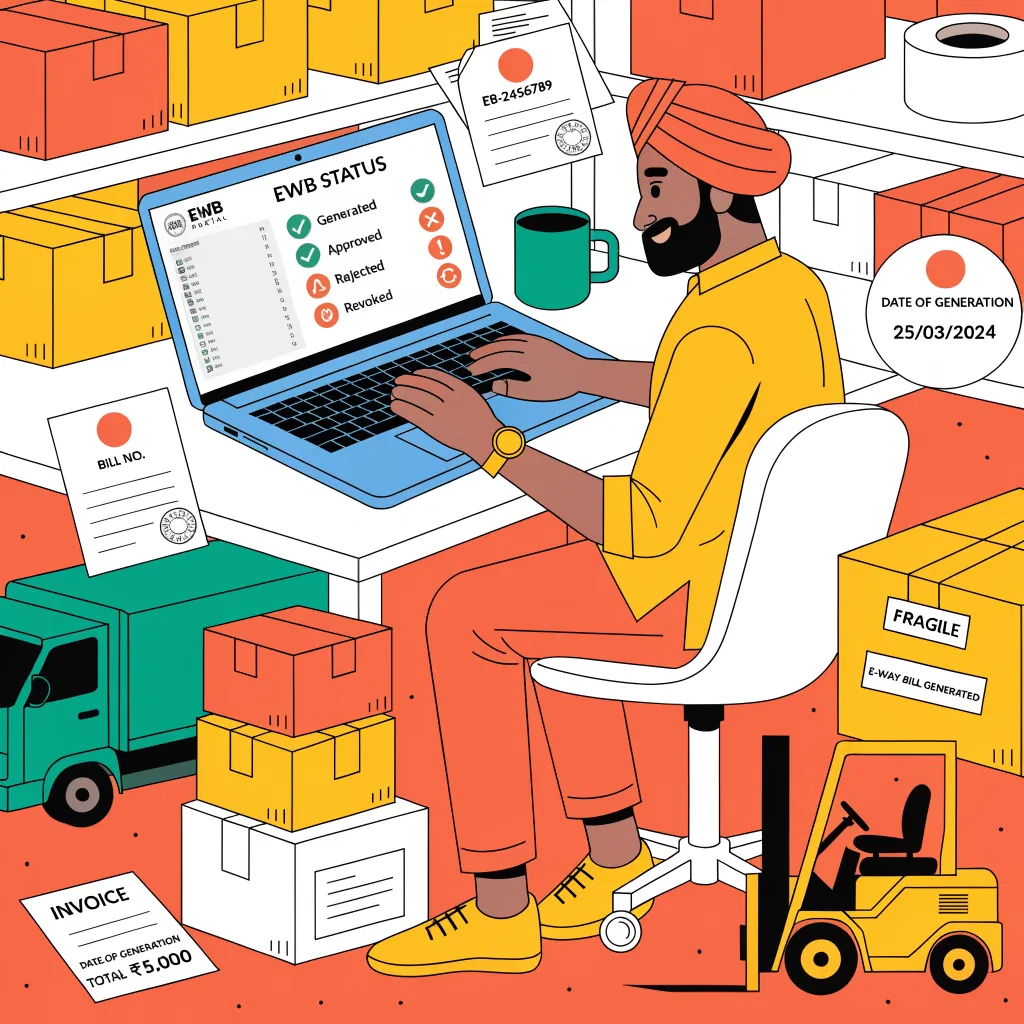
In today's fast-paced business environment, Indian traders and SMBs face numerous challenges related to compliance and efficiency. One of the most daunting aspects is managing E-way bills effectively, a mandate under the Goods and Services Tax (GST) regime. E-way bills are essential for the transport of goods over specific values, and mismanagement can lead to compliance issues and financial losses. In this guide, we'll explore how traders can maximize their E-way bill management to avoid pitfalls and streamline their operations.
The E-way bill system was introduced to ensure that goods transported across states are genuine and comply with the GST laws. Every trader needs to provide an E-way bill when transporting goods valued above ₹50,000. This not only enhances transparency but also minimizes tax evasion. Failing to generate an E-way bill can result in penalties, disruptions in the transport of goods, and ultimately, losses.
For Indian traders, staying compliant with E-way bill requirements is crucial. The process includes generating bills using your GSTIN, ensuring that the correct HSN/SAC codes are used, and submitting relevant returns like GSTR-3B. Understanding these basics will set the foundation for optimizing your E-way bill management.
To streamline E-way bill management, traders can implement several practices:
Despite understanding its importance, traders often encounter various challenges while managing E-way bills:
Consider the case of a textile trading business in Surat, Gujarat. This company, “Surat Silks,” faced recurring issues with E-way bill compliance, leading to fines and supply chain delays. After implementing BillClap’s E-way bill management features, they streamlined their processes significantly.
By automating the generation of E-way bills, Surat Silks managed to reduce processing time by 50%. They also trained their staff on GST regulations, enhancing their understanding of HSN/SAC codes and E-way bill compliance. The result? The company not only avoided penalties but also improved overall operational efficiency, leading to a 20% increase in revenue within six months.
Q: What is an E-way bill?
A: An E-way bill is a document required for the transportation of goods worth more than ₹50,000 under GST. It contains details about the goods being transported and must be generated before the transportation begins.
Q: How can I automate E-way bill generation?
A: You can automate E-way bill generation by using a billing software like BillClap, which integrates seamlessly with your existing systems and minimizes manual errors.
Q: What are the penalties for not generating an E-way bill?
A: Failure to generate an E-way bill can result in a penalty ranging from ₹10,000 to the tax amount involved, leading to financial losses and complications in business operations.
Effective E-way bill management is essential for Indian traders to avoid compliance issues and optimize their operations. By implementing strategies such as automation, regular training, and thorough audits, traders can navigate the complexities of GST efficiently. Don't let E-way bill management be a burden. Sign up for a free account at BillClap today and take the first step towards hassle-free billing and compliance!
Download our mobile app from playstore now

All-in-one cloud-based business management software. Sell Smart, Sell Online with 0% Commission. Manage billing, bahikhata, inventory & expenses